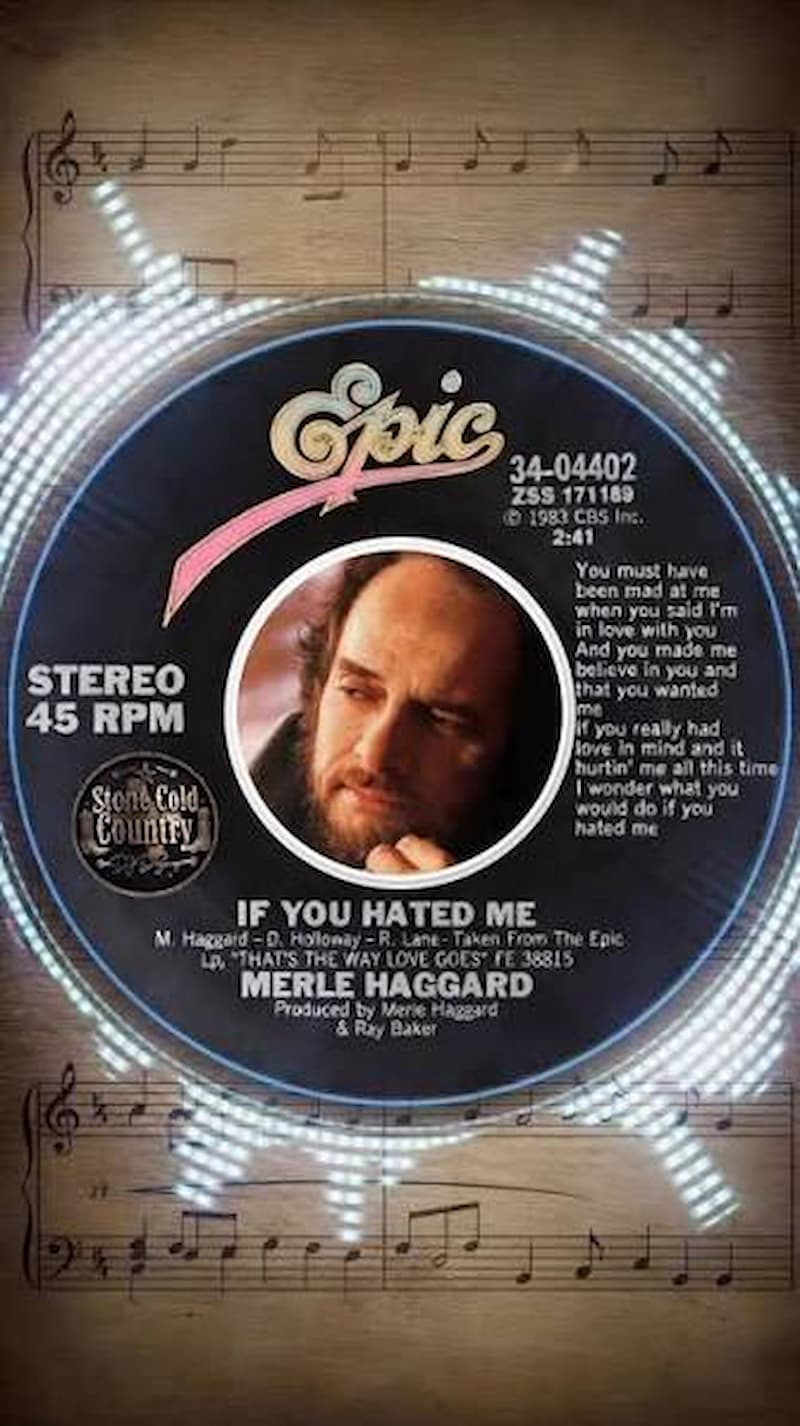
About The Song
In 1984 Merle Haggard released the album *It’s All in the Game*, a collection that found him exploring the quieter, more complicated corners of love and loss. One of its most unflinching tracks was “If You Hated Me,” written entirely by Haggard himself. The song is a spare, emotionally direct ballad about the pain of realizing that the person you still care for feels nothing — or worse, feels active dislike. It never became a major single, but it has remained a quiet favorite among listeners who appreciate Haggard’s willingness to sit with difficult emotional truths.
The lyrics describe a narrator who would almost prefer outright hatred to the colder reality of indifference. At least hatred would mean the other person still felt something strong enough to matter. Instead, there is only distance and the slow realization that the love was never returned in equal measure. Haggard delivers the words with characteristic restraint, his voice carrying both the weight of experience and a kind of weary acceptance. There are no dramatic crescendos or sweeping declarations — just the steady acknowledgment of a heart that refuses to stop hoping even when hope has become pointless.
By the mid-1980s Haggard had already lived through enough personal upheaval to write convincingly about the uneven terrain of long relationships. He had survived prison, multiple marriages, and the constant tension between life on the road and the desire for stability. Albums like *Serving 190 Proof* and *The Way I Am* had shown him turning inward, examining middle age and emotional complexity with unusual honesty. “If You Hated Me” fits naturally into that body of work — a song about the particular sting of loving someone who has already emotionally checked out.
What gives the track its lasting power is how little it tries to soften the blow. Haggard doesn’t offer the narrator (or the listener) any easy consolation or dramatic redemption. He simply describes the quiet devastation of one-sided attachment and the strange comfort some people take in believing that strong negative feelings are better than no feelings at all. That honesty resonates because it mirrors the messy, often illogical way real heartbreak works.
The song also reflects Haggard’s broader gift for writing about ordinary emotional struggles without judgment or exaggeration. While he was still delivering hits and cultural statements during this period, tracks like this one showed a deeper willingness to explore the small, private agonies that don’t make headlines. It’s the sound of an artist who understood that sometimes the hardest thing to accept isn’t that love has ended — it’s that it may never have been fully returned in the first place.
Decades later “If You Hated Me” remains one of the most quietly devastating entries in Haggard’s vast catalog. It doesn’t demand attention the way some of his anthems do, but it rewards repeated listening with its steady compassion and its refusal to pretend that emotional pain follows any neat or comforting rules. In a career built on telling the truth about working-class lives and the complicated hearts that live them, this track stands as a powerful reminder that some of the deepest wounds come not from dramatic breakups, but from the slow, silent realization that you were never truly seen or loved in return.
Video
Lyric
You must have been mad at me when you said “I’m in love with you”
And you made me believe in you and that you wanted me
If you really had love in mind and in hurting me all this time
I wonder what you would do if you hated meIf love causes this much pain and revenge really played no part
And you’re about to break my heart when you’re through with me
You must have been mad at me when you said “I’m in love with you”
And I wonder what you would do if you hated meYou must have been mad at me when you said “I’m in love with you”
And I wonder what you would do if you hated me