About The Song
In February 1969 Merle Haggard released “Hungry Eyes,” frequently known as “Mama’s Hungry Eyes,” as the first single from the album A Portrait of Merle Haggard. The session had occurred the previous December with his band The Strangers and producer Ken Nelson at Capitol Records. The single moved steadily up the country charts and reached the number one spot on Billboard’s Hot Country Singles chart in May 1969. The B-side offered “California Blues.”
Haggard composed the song as a tribute to his mother, Flossie Haggard, and the sacrifices she made raising him after his father died when Merle was nine years old. Although the lyrics describe life in a canvas-covered cabin inside a crowded labor camp, this setting was not drawn from the Haggard family’s direct experience. Merle had been born in a converted railroad boxcar in Bakersfield. The narrative instead reflects the broader conditions faced by Dust Bowl refugees and Oklahoma migrants who filled California’s farm labor camps in the 1930s and 1940s.
According to country music historian Bill Malone, Haggard wrote the piece to honor an entire generation of Okies. These families performed demanding physical work for modest pay while often encountering prejudice from established residents. Many lived in temporary housing and saw their efforts produce only gradual improvement. The song captures the perspective of people who found themselves at the lower levels of the social structure with few alternatives available to them.
Haggard’s background gave him an intimate view of the world he depicted. Raised among families who had relocated from the South and Midwest to the San Joaquin Valley, he absorbed accounts of migration, hard times, and adaptation. His father’s early death removed a steady presence from the home and left his mother to manage alone. That loss played a role in a restless phase of Haggard’s teenage years that preceded his turn toward music.
The release formed part of a remarkably active stretch in Haggard’s career. Nineteen sixty-nine also saw the appearance of other strong material including “Workin’ Man Blues” and “Silver Wings.” Music critics have pointed out that most country artists would be pleased to record three songs of comparable substance and staying power over an entire career, let alone within one year of releases.
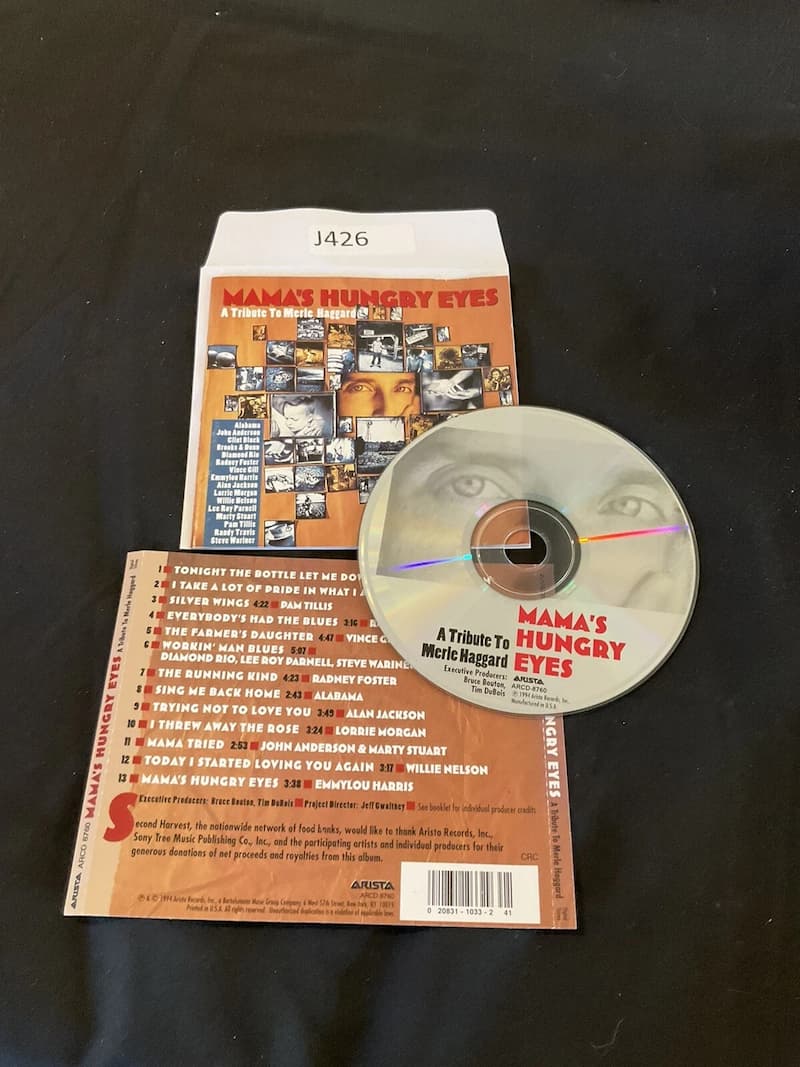
Decades later the song retained its prominence. In 1994 a multi-artist project called Mama’s Hungry Eyes: A Tribute to Merle Haggard was issued, with proceeds going to Second Harvest Food Bank. The album title highlighted how the track had come to stand for Haggard’s wider body of work concerning working families and economic pressure. Haggard continued to include the song in his live sets well into later years.
Haggard once remarked that the best songs feel as though they have always been present rather than newly created. “Hungry Eyes” carries something of that timeless character. It offers a straightforward account of lives defined by steady labor and restricted choices, told in a manner that lets the underlying steadiness of the people involved come through clearly.