About The Song
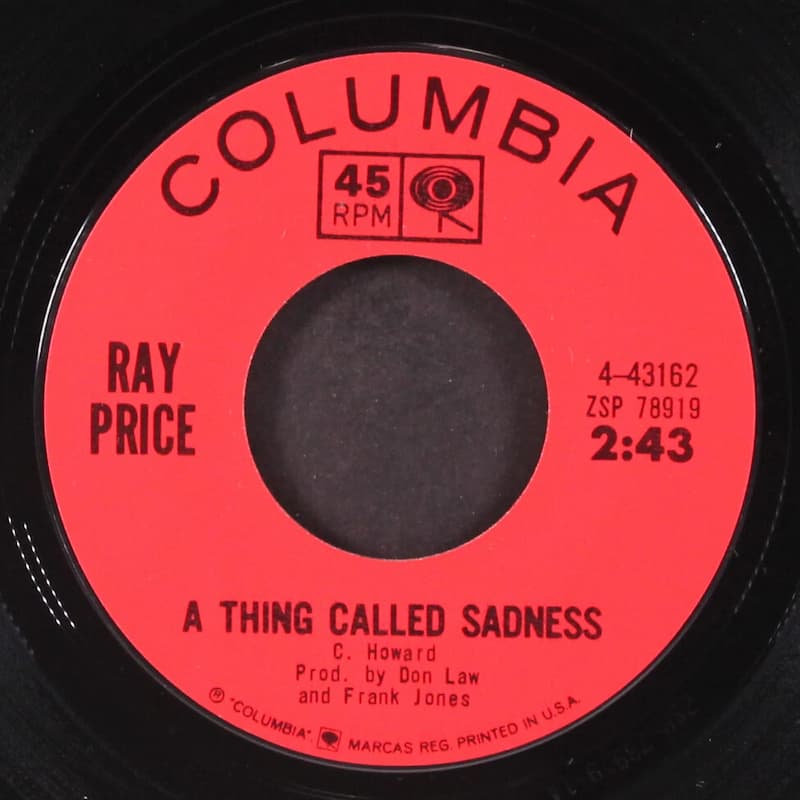
Ray Price continued to deliver strong traditional country material in late 1964, even as the Nashville Sound gained momentum around him. “A Thing Called Sadness,” released as a single on November 2, 1964, on Columbia Records, paired with “Here Comes My Baby Back Again” on the B-side. The track captured Price at a moment when his Cherokee Cowboys shuffle remained a cornerstone of his sound, blending steel guitar and rhythmic drive with the emotional weight that had defined his hits throughout the 1950s and early 1960s.
Songwriter Chuck Howard, a Kentucky-born artist who had recorded rockabilly and country sides since the late 1950s, penned the number and released his own version earlier in 1964 on the Fraternity label. Howard’s original reached modest regional airplay, but Price saw greater potential in the material. The two men shared a connection through Nashville’s songwriting circles, and Price’s decision to record it reflected his longtime practice of spotting strong songs from emerging writers. Howard later contributed to other artists’ catalogs before passing away in 1983.
Price cut the track in mid-1964 at Columbia Studio in Nashville under the guidance of veteran producers Don Law and Frank Jones. The arrangement stayed faithful to the Texas shuffle style Price had popularized, featuring prominent steel guitar work and the tight interplay of his road band. His rich baritone delivered the lyrics with measured restraint, allowing the story to unfold without overstatement. The session occurred during a busy period when Price was also preparing material for his upcoming album.
Columbia issued the full album *Burning Memories* in early 1965. The LP debuted on Billboard’s country albums chart on March 20, 1965, climbed to number eight, and spent nine weeks on the survey. While “A Thing Called Sadness” reached only number thirty-eight on the Hot Country Singles chart, the album as a whole performed solidly and included several stronger hits such as “Burning Memories,” “Make the World Go Away,” and “Soft Rain.” The project showcased Price’s ability to anchor a collection with both original material and well-chosen covers.
In the song, sadness arrives the moment a lover walks out the door and lingers like an unwanted companion. It follows the narrator from room to room, sits in every chair, and refuses to leave. Lines such as “It’s been here since you’ve been gone, it’s been hanging ’round too long” paint a picture of everyday loneliness without melodrama. Price’s controlled phrasing made the personified emotion feel immediate and believable, turning a simple concept into a relatable portrait of heartbreak.
Although the single fell short of Price’s usual top-ten success, the recording earned steady radio play and found a lasting place in his live sets. It highlighted the tensions in country music at the time, as traditionalists like Price balanced familiar sounds against the growing influence of strings and pop production. Fellow artists, including Kitty Wells, later recorded their own versions, underscoring the song’s appeal beyond Price’s interpretation.
Decades later, “A Thing Called Sadness” remains a solid mid-career entry in Price’s extensive catalog. It demonstrated his skill at elevating solid songwriting and maintaining his signature style even as the industry evolved. The track, like much of the *Burning Memories* album, served as a bridge between his honky-tonk roots and the more polished work that followed, reminding listeners why Ray Price stayed relevant for more than six decades.
Video
Lyric
It’s been here since you’ve been gone it’s been hanging round too long
A thing called sadness not much of a friend when you walked out it walked in
In every chair where I sit down it follows me all over town
A thing called sadness not much of a friend when you walked out it walked in
What in the world am I gonna do this old friend can’t take the place of you
It only brings back mem’ries of you and all the things that we used to do
In every chair…