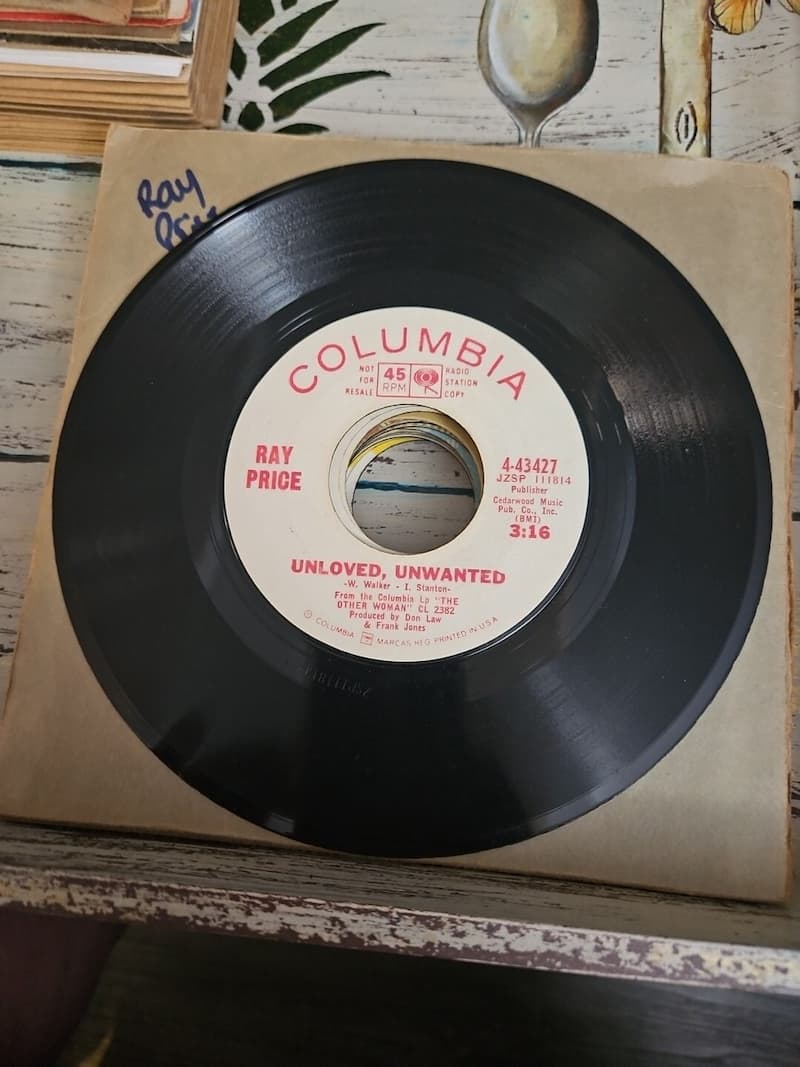
About The Song
In 1965, Ray Price included “Unloved, Unwanted” on his Columbia album *The Other Woman*. Released in September 1965, the LP peaked at number three on the Billboard Top Country Albums chart and spent 38 weeks on the list. The song served as the B-side to the single “Don’t You Ever Get Tired Of Hurting Me,” which reached number eleven on the Hot Country Songs chart in late 1965. Although it did not chart on its own, the track became a fan favorite and was later included on several of Price’s greatest hits compilations.
The song was written by Irene Stanton and Wayne P. Walker, a songwriting team known for crafting emotionally direct country material. Kitty Wells had taken the song to number five on the country chart in 1962, giving it an established place in the genre before Price recorded his version. By choosing the track, Price added his own deep baritone interpretation to a song already proven to connect with audiences dealing with troubled relationships.
At this stage in his career, Price was fully immersed in the smoother Nashville Sound. He had largely moved beyond the driving shuffle beat that made him famous in the 1950s, embracing string sections and more polished arrangements while keeping the emotional honesty that defined his singing. The album *The Other Woman* featured several songs exploring themes of infidelity, regret, and complicated love, fitting the era’s countrypolitan style.
Produced by Don Law and Frank Jones at Columbia’s Nashville studios, “Unloved, Unwanted” showcases Price’s ability to convey quiet desperation. The lyrics paint the portrait of someone trapped in a cold relationship: “Unloved, unwanted, I’ve never been so blue / I know that I should leave but I don’t want to.” The narrator acknowledges wearing the ring and sharing the name, yet feeling emotionally abandoned. The pain lies not just in being unloved, but in the inability to walk away despite the hurt.
The performance is restrained yet powerful, allowing Price’s rich voice to carry the weight of resignation and lingering attachment. Session musicians of the era, including top Nashville players, provided subtle steel guitar and piano touches that heightened the melancholy without overpowering the vocal. This approach helped the song feel intimate, as if the singer were confiding directly to the listener.
*The Other Woman* as a whole performed strongly, driven by the title track’s number two chart showing. Price’s willingness to record deeply personal ballads like “Unloved, Unwanted” helped maintain his popularity during a time when country music was becoming more sophisticated. The album demonstrated that he could deliver both commercial singles and heartfelt album tracks with equal conviction.
Decades later, the song remains a poignant example of Ray Price’s interpretive skill. It captures the complicated emotions of staying in a loveless situation, a theme that has kept it relevant long after its original release. For many fans, it stands as one of the quieter but most affecting moments in his extensive mid-1960s catalog.
Video
Lyric
Unloved unwanted I’ve never been so blue
I know that I should leave but I don’t want to
Unloved unwanted is the life I live with you
I know that I should leave but I don’t want to
You have my name you wear my ring I remember when our love was real
You’re in his arms he has your heart
Are you happy with the kisses that you steal
Unloved unwanted I’ve never been so blue
I know that I should leave but I don’t want to
You have my name…